Plagued by the Clever

Marzipan is yummy. But how much marzipan is too much marzipan?

Imagine you owned a Marzipaniter, a device that generated as much of the stuff as you wanted. All day, every day, an endless tube of sugary almond paste at the touch of a button. How would that change your attitude about marzipan?

Now imagine, next to your Marzipaniter, you had a Shakespearion. Every time you pressed PLAY, a brilliant new drama would emerge. And for this thought experiment to work, you have to imagine that each play is truly good. Not ironically wink-wink pretty-good-for-a-machine good, but amazing. Beep, whir… King Lear. Beep… Hamlet. Beep-boop… Midsummer Night’s Dream.

Both of these devices seem far-fetched. But I regret to inform you that the Shakespeare Button is closer than you might imagine. It’s worth taking seriously long enough to think through the implications.

Artificial intelligence has made it possible to generate not just copious amounts of what is being called “slop”. It’s also being used to generate copious amounts of really good stuff. Just today I was talking to my friend Mike at work about AI and software. We were discussing a certain professor on LinkedIn who was, with the assistance of AI, releasing vast amounts of software. Truly volcanic output. I pointed out that the software appeared to be quite good. Mike said it was annoying. It was noisy. Regardless of its quality, its volume robbed it of the designation “excellent.”

How much does your concept of quality depend on scarcity?

We’re moving, and moving quickly, into a world where there will be an endless torrent of AI-generated content. And as Sturgeon’s Law tells us, 90% of everything is crap. But old Theodore Sturgeon himself had no interest in dwelling on that part of the equation. The remaining 10% is gold. The glass isn’t 90% empty. It’s 10% full. If we apply this adage to the age of infinite AI-generated content, then you can do the math: 10% of infinity is… quite a lot. You see? Even if you feel compelled to discount my 10%, an infinite amount of really good stuff is coming your way. Perpetual novelty piped into your sense pots every minute of every day.

What I want to know is how you feel about it.

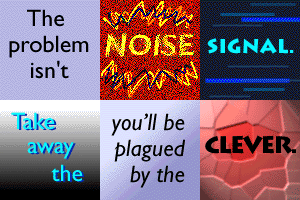
I made this animated GIF more than 25 years ago, when the web was young

This is a world of quality inflation, where mere talent feels cheap. It’s disorienting, because it threatens to invert our notions of effort and mastery. But that thumping anxiety in your chest will pass. We already live in a world of endless excellence. Do you ever get bookstore anxiety? That panicky overwhelm of too many good books and not enough time? It’s the same thing. But it passes. There’s no need to feel sad about an infinite amount of good content you’ll never consume. As a practical matter, we’re already there.

And here is the thing that will empower you: in a world where excellence becomes abundant, what becomes scarce? As other people’s content gets cheap, it’s your attention that gets expensive. Congratulations! You control one of the most valuable assets in the New World. And it will only get more valuable.

Content doesn’t command you. It conforms to you. To your intent and attention. Your eyes set its price. When you adopt this attitude, you realize that you no longer need to be intimidated by bookstores or AI slop-shops. They tremble at your power! They hunger for your lifegiving gaze. You’re in the driver’s seat. They are your scenery. Enjoy the ride.

Obliquity – On The Difference Between Knowing Something and Owning It

When I was in grad school, my friend Larry Alder and I had a special term for when you truly understood something. Everyone knows that, armed with a little knowledge, you can sometimes wing it. Fake it. Multiple choice test? You’ll do okay. Of course, if you put in the time memorizing lists of facts, you can do better. You’ll probably even get a good grade in the class. But do you REALLY understand it? Really? This can be brutally important for some topics.

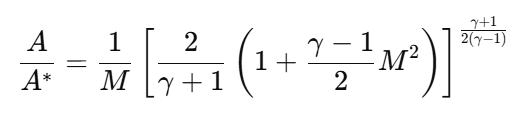
Let’s say you’re being grilled on a subject like, oh I don’t know, the area-Mach relation in a supersonic converging-diverging rocket nozzle. Of course you already know that

because duh, right?

Then again, that’s just a string of fancy letters and numbers. What assumptions does it depend on? Can you re-derive it on the whiteboard right now? Do you see how it’s implied by the conservation of mass flow? Do you understand the physical implication of the specific heat ratio? Can you explain it to me like it’s two in the morning, I’m going crazy, and I have to finish this godforsaken problem set before I go to sleep?

Because that’s how it was with me and Larry. We were in the same classes and we often helped each other with tough problems. There were times when one of us (probably me) would say “Well, I get the right answer, but I can’t explain why.” That’s KNOWING the answer. And there were other times when one of us (probably Larry) would say “What do you want to know? I can explain this a few different ways.” That’s OWNING the answer. That’s when you see how it slots snugly into the grid of everything else you know. How it’s not just interesting THAT it’s true, because of course it simply MUST be true.

I don’t claim that I owned many topics (including my old nemesis, the converging-diverging nozzle). But it was a useful distinction. I sometimes think of it like this: Tell me something you know. Now tell me something that will get you laid. The first of these is flashy knowledge, insubstantial. Ooh! Big boy knows some Greek letters! The second of these, well, that’s worth something. It’s hard to get to and it’s hard to fake.

This whole concept has been on my brain a lot recently because of Crepusculus. I’m sure you remember that Crepusculus is the festival that falls on the day of the earliest sunset (which is December 9th at my latitude). Without getting into it too much, the earliest sunset happens earlier than the shortest day (December 21st), because of something with the very grand name of Equation of Time. The Equation of Time, in turn, depends on two major factors: the elliptical nature of the Earth’s orbit (eccentricity) and the tilt of the Earth’s axis (obliquity). I’m not pretending to explain any of this here, but I will tell you that the eccentricity part is easy to understand and explain. But the obliquity part… I just couldn’t SEE it. I knew the equation, I read the explanations on various web pages, but I didn’t OWN it in a satisfying way. So that was the challenge I set for myself this year.

I’m happy to say I succeeded, at least to my own satisfaction. I wrote a bunch of MATLAB code and made some fun models. If you want to follow the technical discussion, you can follow along with the piece that I put on my work blog: The Perils of Obliquity. And as a bonus, I vibe-coded a JavaScript web app you can run here: Obliquity.

The main thing I wanted to ruminate on here was this crucial difference between the name dropping that passes for knowledge and the thorough embrace by which we push machines through the sky.

The Brush You Have – Kelly Boesch’s AI-Assisted Art

In the caverns of Lascaux, the canvas was stone and the pigment was dirt. Mud was the medium because the mud was there. That was the brush the artist had.

Every generation of artists is supplied with its own sets of media, often dictated by current technology. Painters in the nineteenth century benefited from advances in chemical engineering. For the first time in history they had a complete spectrum of colors brilliant, stable, and pure. Cadmium reds, chrome yellows, cobalt blues, and viridian greens brought Monet’s waterlilies to life. In any previous century they would have been muted and browned.

The nature of the medium also raises questions about the nature of the art. Earlier generations debated if photography could even be considered art. Or we might say Matisse’s paper cut-outs are no more than scraps cut from someone else’s paper. That’s not real art. But cut paper was the medium available to him, and he was an artist.

My favorite example of shifting media comes from the early days of YouTube. YouTube provided so much free digital video ore that an artist like Kutiman could mine and smelt it to create entirely new videos (like the fantastic Mother of All Funk Chords) solely from found pre-existing videos. Looked at one way, all he did was clip together other people’s videos. But from a different viewpoint, he was a highly-skilled artist working with a new medium: cast-off video scraps.

The compost of one generation become the pigment for the next. The brush doesn’t make the artist. The artist makes the brush. Kutiman painted with pre-existing videos just as surely as Botticelli painted with a horsehair brush.

All this brings me to the age of artificial intelligence. When we think of an artist using AI, it’s easy to think of the machine as doing the work of the artist. Computer, paint me something nice. This is AI as crutch. This scenario, in which the artist is excised, gives the artist too little credit.

An artist is an artist, and they will find a way to grab hold of the brush. Kelly Boesch is a video artist working in the world of AI. She uses these tools in a maximalist but still expressive way. You want to feel good about the future of self-expression? You want to see the new brush? Look at her work. It is unapologetic. AI is the brush, not the crutch. It’s not pretending to be something that it isn’t. And it’s amazing.

Watch.

As always, this question that hangs over cynics, doubters, and pessimists: If you think this is easy, could you do it? But more important, does it touch you the way art must? For me the answer is yes.

AI is just another brush, and I am delighted to watch Kelly Boesch wield it.

From How to What: The Plummeting Cost of How

A century ago, the cost of shipping was a significant fraction of what you paid for, say, an article of clothing. As a result, goods were often manufactured close to where they would be sold. So, for example, the garment district in Manhattan is literally where the clothes were made. But when containerized shipping was introduced, the cost of shipping started to drop. Clever entrepreneurs realized that labor in Manhattan is crazy expensive. With cheap shipping, they could shift that work to lower cost locations in the Midwest. This was sound logic up to a point, but it wasn’t bold enough. Because shipping continued to get cheaper and cheaper still. What happens when the cost of shipping effectively drops to zero? In that case, you don’t move your manufacturing to Minnesota. You move it to Malaysia. It was one thing to see the cost of shipping was dropping. But it took some courage to see what the play was when shipping went to zero. Those who spotted the trend but only took half measures went bust. (For background on this, I highly recommend The Box by Marc Levinson.)

We live in an age where many forms of scarcity are being replaced by abundance. Something similar happened to the cost of computing. Young Bill Gates and Paul Allen were among the first to realize the implications of the crashing price of computing. Hardware would become commoditized, and all the leverage would pass to software. They made a bold bet, and I would argue that it worked out nicely for them. (For background on this, I highly recommend the Acquired podcast episode on Microsoft.)

Given this prologue, how should we think about what’s happening with artificial intelligence? Yet another expensive resource is suddenly getting cheap. The cost of How is collapsing. Let’s say you have, through close study and hard work, learned a difficult skill. You know how to compute integrals, or debug recursive sorting algorithms, or perform postorder traversal of a binary tree. I regret to inform you that Knowing How is no longer grounds for job security. You get a gold star and a pat on the head for being clever. But we now have cheap and unlimited access to vast quantities of How via Large Language Models.

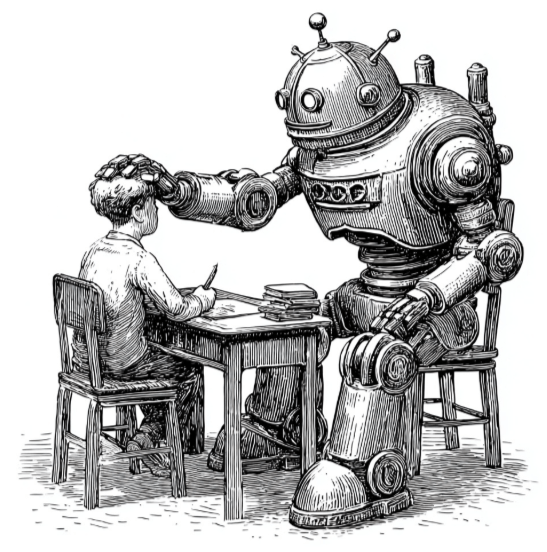
Image by Midjourney

What are the implications of all this? The first thought is “Hey, this is awesome. AI will show me how to write software more efficiently.” Which is no doubt true. But what is the bold bet? In a world where you don’t need to know HOW to program, all the leverage passes to people who know WHAT to program.

What are the coming skills we need to prepare for? What are the skills we need to train for? We need to help people with What questions rather than How questions. What should you build, and why? This means helping people with articulating intent and helping them with discerning and providing feedback on intermediate results. Intent and discernment are What skills. How skills are being devalued with every passing day. What is the bold bet? What happens when the price of How collapses to zero?

Don’t get left playing a How game in a What world.

You Will Subscribe to Everything

Did you forget the password to your toothbrush again?

This is a real thing. And it’s funny because it’s both ridiculous and true, right? Because software is eating the world and user accounts are everywhere.

But why is software eating the world? It’s because, in many cases, it really does make things better. Your connected doorbell can show you who’s at the door. Your connected car can tell you where it’s parked. Your connected toothbrush can tell you… okay, I’m not sure about that one, I confess. But somebody thinks it’s cool.

The downside, of course, is now you have to worry about privacy, passwords, and security. For your freaking toothbrush. Some things get better, some get worse. Why not just opt out? Maybe you think the benefits aren’t worth the hassle. Go ahead: try to fight back. Buy yourself a wooden toothbrush with boar-hair bristles. But I’m here to tell you this is an unstoppable trend. The software tsunami is just getting started. Connected software is going into everything, and with it come user accounts, passwords, and subscription fees. In the future, you will subscribe to everything.

Why is that? Once something has software that is connected to the world, you have to worry about security, and security is an expensive, never-ending game. You’re going to need a steady flow of security updates for all of your connected devices. And that means people need to be paid to keep providing those updates. And THAT means you’ll be incurring costs with your doorbell vendor for years after you buy the thing. And THAT means you’ll be paying for a subscription.

Think of it from the vendor’s point of view. If you sell me a doughnut, you take my money and you’re done with that doughnut forever. But if you sell me a battery-powered wifi-connected doughnut with a GoNutz4Donutz iOS app, then I’m going to expect you give me bug fixes, updates, and security patches forever. It won’t be cheap and it won’t stop. That doughnut sale will haunt you for years.

The world of the future will be a world of services, not products. You will throw away hardware on a schedule determined by software, not by hardware. I had to trash my first-generation Sonos speaker, not because the hardware had aged out, but because Sonos refused to support the software anymore. I didn’t get a choice. One day they turned my speakers into bricks. Soon enough, this is going to be the fate of your car. The engine will be fine. But a software engineer somewhere far away will change a setting and your car will never work again.

I have decided that it’s best to think about all these clever, needy, infectable devices as animals. Your devices are alive.

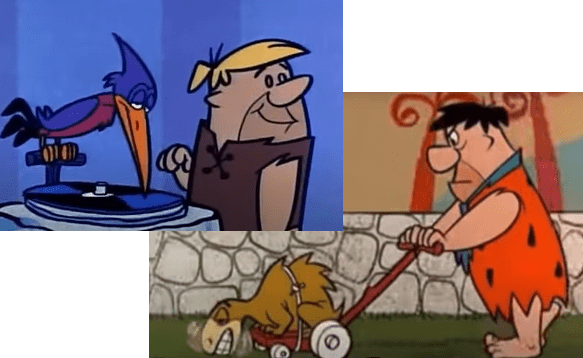
It calls to mind an image from the Flintstones, where all the appliances were animals of one kind or another. The phonograph was a bird. The lawnmower was a grazing herbivore. Without care and feeding, they will die. Or worse. They might attack you, courtesy of some North Korean malware.

The world is getting better. The world is getting worse. On balance, I think it’s probably getting better. But take my word for it: in the future, you will subscribe to everything.

A List of First Names of People Who Use My Email Address

Or: The hazards of having a short, easy-to-remember email address.

I got in early on Gmail. When it was first rolling out, it was the hot new service that everybody wanted. But at the time, you couldn’t just sign up. You needed an invitation from someone on the inside. From one of the cool kids. When I finally found someone who was willing to sponsor me with one of those precious invitations, I ran quick like a bunny to see if my last name was still available. Please please please I hope I get it.

I was worried that I was already too late to the party. I was afraid I’d get stuck with n_gulley2919@gmail.com. Or worse, I could end up in cute nickname hell: booboobear72@gmail.com or sweetcheeks11@gmail.com

But I was lucky. My last name was still available. There it was: gulley@gmail.com. Clean, compact, accurate, memorable. I was thrilled!

I somehow thought more people would notice and admire my awesomely compact email address. “Oh sir,” I imagined them saying, “I cannot help but notice your awesomely compact email address. How clever and far-seeing you are! Let us book you into the Presidential Suite.” In fact, the awesomely compact nature of my email address has only been remarked on once, to my knowledge, and it did not result in a Presidential Suite upgrade. Or even a discounted hot dog topping.

But there was one group that was happy to take advantage of my situation. Consider this: of the 13,868 people on the planet with my last name (ooh look, a source!), I’m the only one who got it for an email address. Which is pretty cool, except… I can’t actually keep all those kids off my lawn. All of those people feel strangely entitled to use my address. On account, I suppose, of it being their last name too. As far as I can tell, it hardly matters to them that they’ll never read the email sent to that address. They nevertheless keep filling out forms day after day after day, pretending that my address is theirs.

And so I present herewith a partial list of the first names of people whose email I get.

  • Aaron
  • Akirrah
  • Andrew
  • Antonio
  • Deshadria
  • Edna
  • Eumonee
  • Dan
  • Deshadria
  • Dewey
  • Forrest
  • Genita
  • Hesley
  • Jean
  • Jimmie
  • Kendra
  • Kerona
  • Lowell
  • Margaret
  • Maria
  • Michael
  • Paige
  • Regina
  • Renaurd
  • Tameka
  • Tsietsi
  • Virge

As far as I can tell, these are all legitimately people who share my last name. I don’t know if they put down my email address because of an honest mistake, or because their intent is to misdirect any follow-up mail. All I know is I get an awful lot of it, and since it’s legitimate mail to someone, it doesn’t get weeded out by spam filters.

I’m reminded of the story of the California man who chose NULL as his license plate. He thought this might make it hard for him to get tickets. The database would assign any fine to NULL and so the infraction would get ignored and lost. But it worked just the other way around. Fines that were lost found him. See How a ‘NULL’ License Plate Landed One Hacker in Ticket Hell | WIRED.

I wanted a compact address, but what I got was a giant funnel.

A lot of the email I get is straightforward retail correspondence (Paige, I know ALL ABOUT that stuff you order from Etsy. You know what I’m talking about.). But some of it is from angry creditors. It’s hard to unsubscribe from angry creditors, and it kind of makes you feel bad, like you’re really the one who did something wrong. Jimmie, please pay for those medical diagnostics! It’s the right thing to do. Plus I’m catching some serious heat here.

In general, it still seems weird how easily email addresses can lead to strange mischief. You can unsubscribe from solicitation, but you can’t really unsubscribe from bills. I get emailed bills all the time and I can’t make them stop. For these people, I’m often empowered to reset their account passwords. I’ve tried to log in and remove my email address, but then two-factor authentication sends a text to Kendra or Genita or Dan and that’s the end of that. So I’m lodged in all these accounts in hard-to-reverse ways.

I still like my email address, but I’m thinking I should check and see if booboobear72@gmail.com is still available.

Evolving the Big Brain

Brains are expensive. Your brain consumes about 20% of your resting metabolism. It’s easy to look back at the history of our species and tell a self-congratulatory story about intelligence. We got smart, and then we kicked ass, right? But early on in the process, it wasn’t clear that it was smart to be smart. In order to grow that big brain, you’re going to develop more slowly and divert scarce resources away from muscles and teeth. Slow, big-headed babies make a tempting snacks for passing carnivores. And you need to evolve the hardware before you can make the software for it. The social and cultural benefits of intelligence must necessarily lag behind the physiological development of the brain itself. So why bother growing a big brain given its outrageous metabolic cost and dubious payback? In evolutionary terms, you’ll do worse before you do better.

There is a growing consensus that the reason humans got smart had nothing to do with better hunting. The so-called “social brain hypothesis” asserts that intelligence likely grew from humans navigating complex social relationships. That is, intelligence helped solve the social problems that intelligence was causing. The resulting evolutionary feedback loop powered the rise of human-level intelligence. The key step was using intelligence to solve the problem of social cohesion at a level bigger than, say, the size of a chimpanzee troop. Once humans could live closely in large numbers without murdering one another, the planet was at our feet. Why did we get smart? We got smart because we had to compete with the other guy who was getting smart. Eventually, this worked out pretty well for us.

Curiously, a parallel to the rise of human intelligence is currently happening at the planetary level. Giant computer brains are expensive. Data centers, by some projections, will consume 7-12% of the total US electrical output. Why grow such a big AI brain, given its outrageous energetic cost? We’re recapitulating at a planetary scale the same thing humans went through at the physiological level, and the social brain may well be the link between the two. We’re at the very beginning of a fast-evolving feedback loop. Why did we make our AIs smart? We make them smart because we have to compete with the other guy who is making his AIs smart. As a long-term optimist, I believe that eventually this will work out pretty well for us.

Image by Midjourney

AI’s primary value may be in solving the social problems caused by AI and networked computing. As strangely circular as that sounds, those problems are real and present, so those remedies are necessary. We’re on the track now. We can’t opt out. A small example of AI coming to the social rescue: cleaning up YouTube comments. They are now pleasant and occasionally charming. But they were once toxic slime pools of racism and hate language. One of the bigger concerns about AI is that it can be deployed at scale to convince people to do one’s political bidding. This is the social media nightmare: engagement is driven by negativity, which fuels tribalism and social polarization. This reinforces conspiracy theories and distrust. Scared, angry people are easy to corral. But as it turns out, AIs are good at talking people out of their conspiracy beliefs.

As for my optimism, I appeal to deep history. How did the human race make any progress at all? How did the Renaissance rise from the violent swamps of Machiavelli’s thug-filled Italy? How came it that slavery was abolished? Bad things are happening in the world today, but it was ever thus. Behind it all, there is planetary species-scale learning. And now it’s happening at AI scale and speed. Many bad things will continue to happen, but AI is the only force capable of managing the fast-moving problems that our networked world is creating.

Groundhog Day Cards

Do you send a December holiday card? If so, do you enjoy sending a December holiday card? Or does it make you want to shoot somebody? Allow me to make my pitch for shifting those Christmas cards to Groundhog Day cards.

Sound crazy? Hear me out.

Have you ever seen a Groundhog Day card? It’s not really a Hallmark holiday. But it turns out it’s kind of a good time to send a card, partly for the very reason that it’s odd. Here are some reasons you should send your family card on Groundhog Day

  • You actually have the time to work on it.
    December is a miserable time to be working on a card. You’re too busy being depressed and overeating. January is the perfect down-time month to spend on cards.
  • There’s no competition.
    Your Christmas card will get lost in the crowd of other Christmas cards, and anyway, all those other families are more interesting and better looking. Let’s face it, nobody will bother to read your card. Whereas a card at the beginning of February stands out. It’s a little beacon of delight at a dreary, quiet time of the year.
  • It’s unpretentious.
    Groundhog Day doesn’t take itself too seriously. People smile, “Ha ha, a holiday for a marmot.” Everybody likes the movie. Groundhogs are cute. Unless they eat your tomatoes. But in any event, they won’t eat your garden for another few months.
  • It has strong bones.
    Even though it sounds goofy, Groundhog Day, like Halloween, is a Cross-Quarter Day. It sits in the sweet perch between the solstice and equinox. It’s more powerful than it first appear. You can feel the light returning. Spring isn’t near, but you can smell it from here.

I’ve been sending Groundhog Day cards for more than 20 years, so I can vouch for the fact that it’s much more pleasant than sending Christmas cards. The main thing is to time-shift your cards away from the dread December vortex of the Christmas-Industrial complex. Other folks in my family, following this same logic, send cards on New Year’s Day, Chinese New Year, and Arbor Day. But I remain a fan of Groundhog Day. Join me!

Which reminds me: Happy Groundhog Day!

Memorizing Poetry

Sinatra lyrics, African capitals, summer birthstones… is there any point in memorizing something that you can look up in thirty seconds? With a phone in every pocket, has memorization lost its value? It’s an interesting question. My answer is no. In a world where memorization is scarce, its value only rises. Memorization has strange and surprising powers.

I like memorizing poetry. Why? Because it makes you think very carefully about each word. The thought density of a poem is high. It took a long time to pack all that meaning into it, and it takes a long time to unpack it. Memorization helps that process. Like a archaeologist at a dig, every time you sift through the dirt, you unearth a little more treasure. And once you have committed a poem to memory, you can enjoy device-free playback in any setting at any time. A walk through the countryside, a bout of insomnia, raking leaves, all these can be enriched by a remembered poem.

Beyond interpretation, there is performance. Memorizing poetry is a reliable magic trick. It’s impressive to hear strong, confident words pouring forth without hitch or hesitation, like a stream driving down a mountainside. It feels good to say it and it feels good to hear it. And in the modern age, the differentiating power of having a poem at ready recall is all the stronger. It’s not that hard to do, but even so, people come up to you and say, “I could never do that.”

Even given all this, though, I found it difficult to memorize poems quickly and reliably. I tried a few apps (and there are a number of them), but I didn’t like them. I ultimately got the general-purpose memorization app called Anki, which then led me to Remnote. Taken together, I found the tailor-built poetry apps didn’t have the features I wanted, while the general-purpose apps were too diffuse for me to put to work on poetry.

One day, I found myself musing about how my poetry app would work if I had the skill to write apps. And then I realized that I do have the skill. To be more precise, because of AI, the effort required has plunged to the point that I have the skill, you have the skill, and my cat Mozy has about 80% of the skill needed to create a JavaScript app. You need to start reminding yourself on a regular basis: you have all the skill you need to write a web app. Because all you have to do is tell Claude what you want your app to do.

Here is the app I wrote: Versify.

I don’t claim that it’s very polished yet, but it’s good enough for me to actually use it. The idea was to think of a wavefront moving through the poem. You’re just typing the poem. If you can’t remember the next word, then after a short delay, you get a one letter prompt. Effectively you’re learning by just typing the poem over and over, but you are never allowed to go wrong, so you don’t learn the wrong thing. You don’t form wrong memories.

It’s all very simple, but it works! At least it works for me. I’d love to know if it works for you. I learned along the way that you do better when you build the system. So, for example, you’ll learn faster if you make your own flash cards, as opposed to just grabbing someone else’s. So while what I built works great for me, it might not be so great for you. But the good news is, now you can build your own just as easily as I built mine.

Ditching Change

I feel safe in asserting that you have a Visa card (or a MasterCard, which is basically the same thing). We all know what Visa does. But what IS Visa? That is to say, what is Visa the company? Somehow it’s just part of the landscape, like it must have been around forever. That’s what good infrastructure always feels like.

Here’s a related story. Last month, for the first time in my life, I traveled to another country and never once changed money. Not once. I was in England for a business trip, and during that weeklong trip, every single expense, from train tickets to candy bars, was conveniently paid for with a wave of my phone (which is linked to my Visa card via Apple Pay), or a tap of my credit card on the little Verifone device. It was so nice to return from overseas and not have my pockets full of heavy, unusable coins. It was pretty remarkable to me now, but I also know that in another year it will seem completely unremarkable. I’ll look back in wonder at this ancient, barbaric obsession with fiddly bits of paper and metal.

England has been ahead of us for a while when it comes to this kind of finance. The last time I went there, several years ago, my American credit card didn’t yet have a chip in it. So I was always the bozo slowing down the line at the coffee shop when I ordered my Flat White. The cashier would roll their eyes and look up the procedure for credit cards that you can’t just wave in the air (Bloody Yanks…). Patrons waiting behind me would shift uncomfortably: can you believe this guy?

But this last trip was an absolute breeze. The infrastructure that made it possible was a payment network that was started in 1958. It has taken something like sixty years for that infrastructure and the associated cultural changes to reach the point where I, standing 3000 miles from my home, can wave my phone at a vending machine and get a pack of gum. It’s another good example of how magic becomes physics. Here is something that seems like it shouldn’t be possible, and yet it is. And what happens next? Something astonishing quickly becomes “how the world works.” Gravity is like this too. Background magic.

Pervasive infrastructure has a way of disappearing into the background and then making it hard to remember what life was like before. Cell phone service, smart phones, the Internet, electricity, running water. It’s now hard to imagine life without any of these. And that makes it hard to think clearly about what a monstrous and slow-moving effort it was to put them in place.

If you’re curious about the Visa story, I have just the podcast for you. The Acquired podcast, which in general is very good, did this episode on the history of Visa.

Visa: The Complete History and Strategy.

When it comes to physical currency, the US has always been pokey compared to other countries. Our currency notes look practically identical. We can’t get rid of pennies. We can’t switch our singles to the eminently sensible dollar coin. We’re so conservative that it takes a major disruption for us to switch. Credit cards are that disruption. The revolution is finally here, and we’re using coins and paper money less with every passing day. I used to visit the ATM regularly to take out a small stack of 20s. Now I can goes many weeks without thinking about cash. Is Andrew Jackson too loathsome to honor on the 20? It hardly matters anymore. People will soon forget which presidents are on which bills.

It’s worth taking a little time to be grateful for the background magic of infrastructure. Cash is slowly fading into a minor supporting role. Novelty money. I won’t miss it.